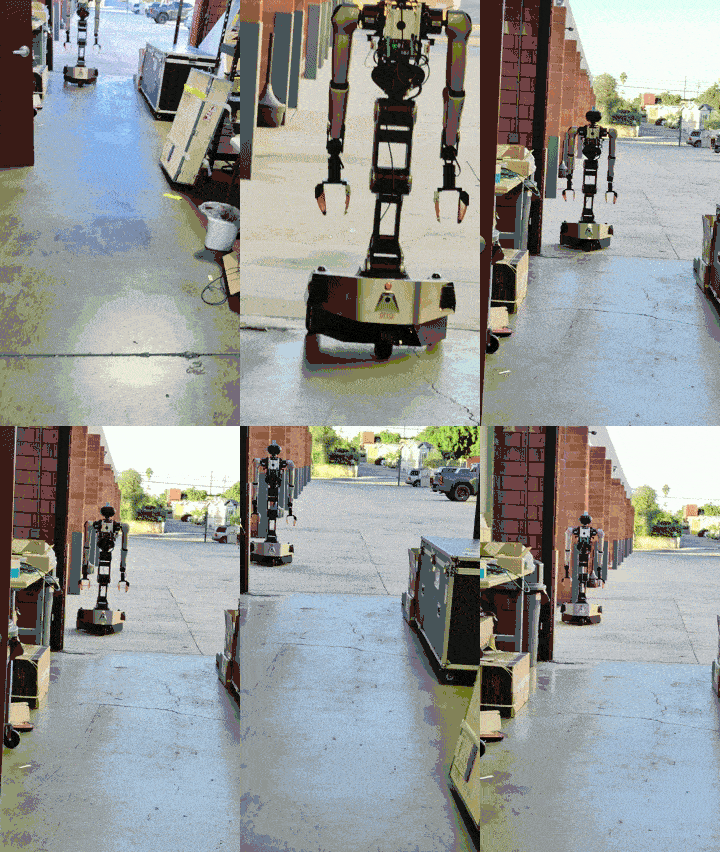
.png)
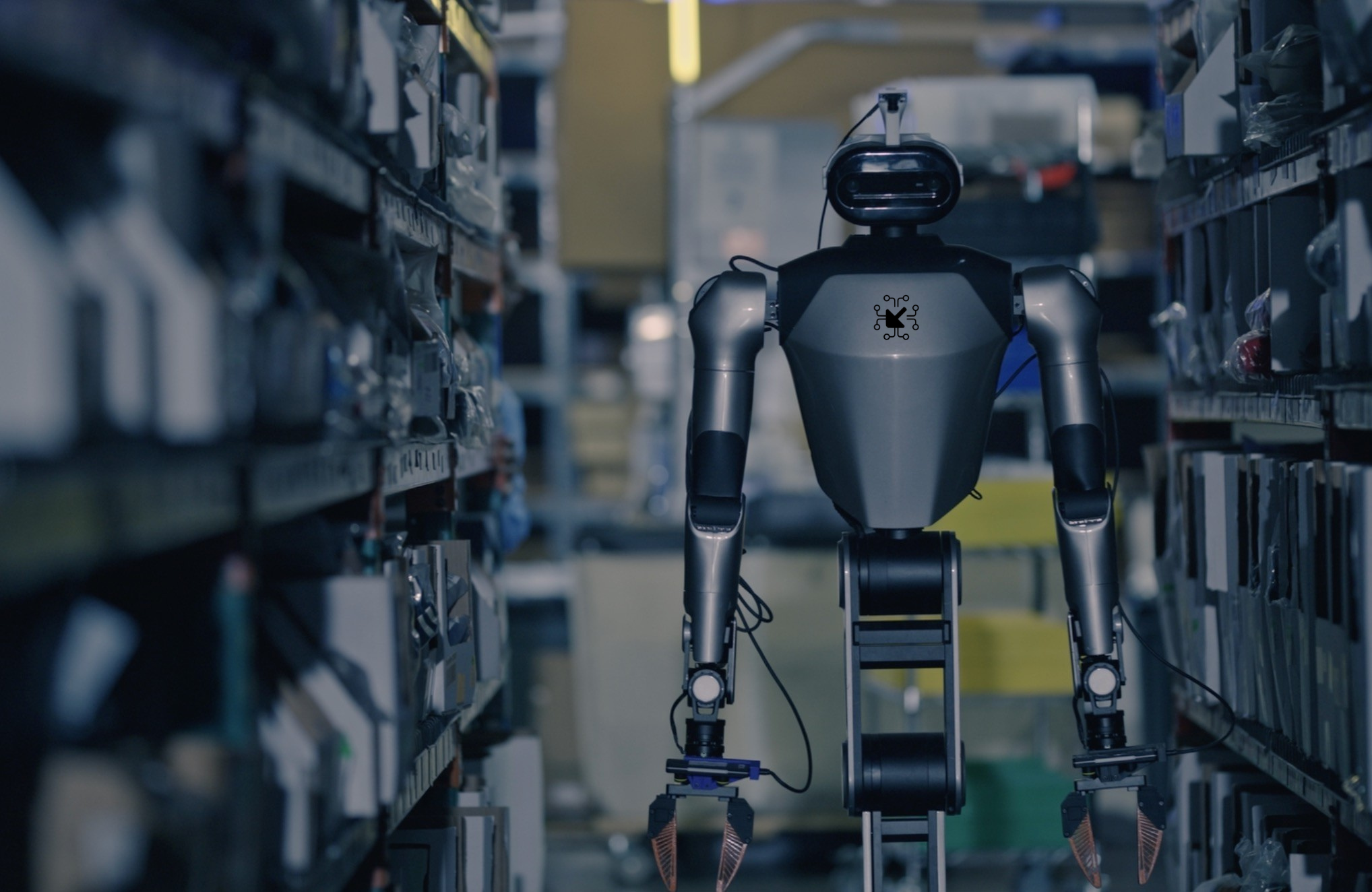
The near-perfection required to execute tasks within our robot stack is akin to a classical ballet, a discipline defined by rigorous technique, precise timing, synchronization, elegant movements, and graceful lines. In a ballet, every artist is an expert who trained for a lifetime to perform on the world’s largest stages. Their technique is flawless, their dependability absolute, because each dancer is critical to the success of the entire presentation. While there may be a star, every member is equally responsible for the whole.
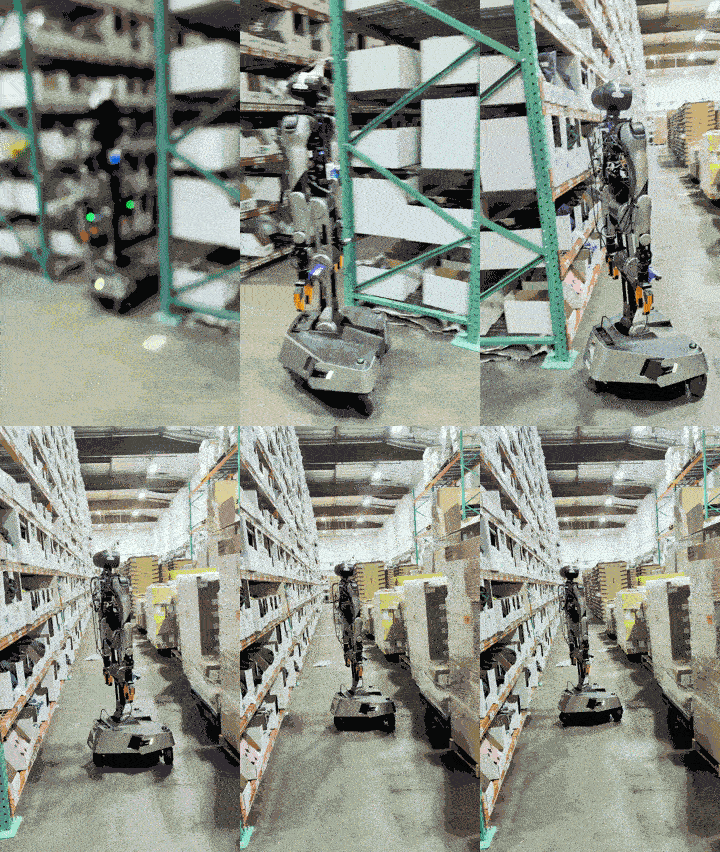
In a ballet, the corps de ballet is the ensemble dancers who back the scene. They must move in perfect sync. If a single dancer loses timing, it creates a cascading failure that throws off the rhythm for all those around them. This level of intricate, synchronized performance is precisely what our robotic stack embodies. What we have achieved is a Swan Lake of Robotics.
In a ballet, music provides the timing; the music of our stack is the universe's precise clock tick, microsecond timing, giving the robots their rhythm to dance to. To synchronize each mechanical movement requires engineers who have trained for their entire careers to reach this point. Our stage may not be as glamorous as the Opéra de Paris, but we are just as honored to be performing our ballet in the backbones of the American, and global, economy.
We have honed our skill and developed the perfect technique to create a novel software framework that accomplishes a synchronized ballet, one that will usher in the new paradigm of physical AI. Every component is a dancer with a critical role in the flow:
The gripper is the star, the end effector that executes the final task of picking or placing a product, but without every other component executing its role dependably, pick after pick, the ultimate task is impossible.
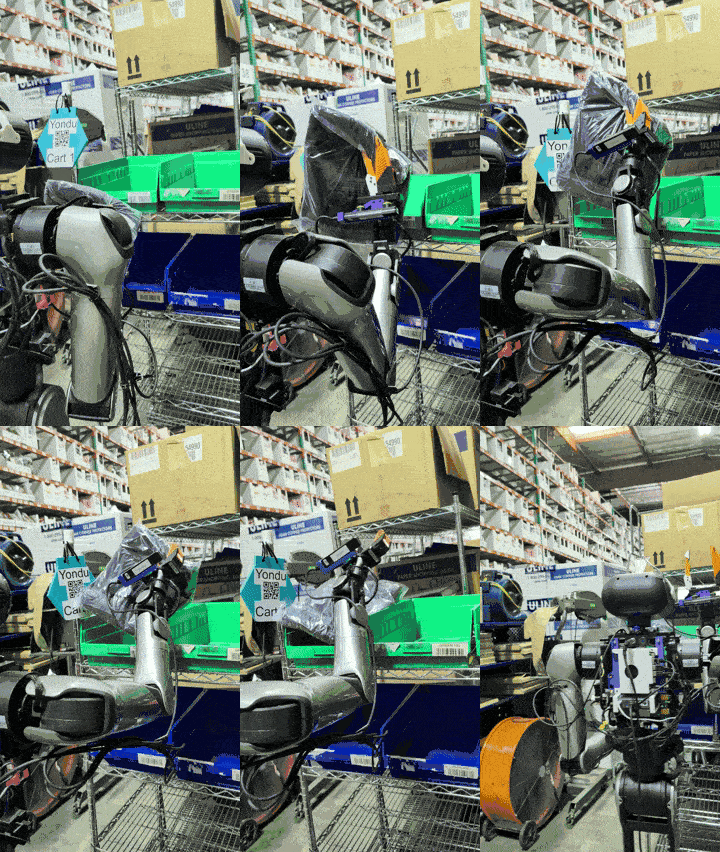
Achieving this level of perfect coordination, however, is not always a fun, linear process. There have been countless late nights, endless iteration, and what often felt like banging our heads against the wall. There is a point where you are simply grateful the system you designed runs at all. And that is only the proof of concept phase. What follows is a brutal cycle of testing, security, review, and redesign. This is where we stress-test our system, ensure our stack is robust, question and defend our code, and aggressively expose, patch, and squash every flaw and bug.
The innovation process has a built-in "ego governor," where an overconfident design is blunted by the realization that the beautiful plan is, in fact, not the beautiful solution. This is where collaboration, open-mindedness, and knowing when to ask for help become the priority.
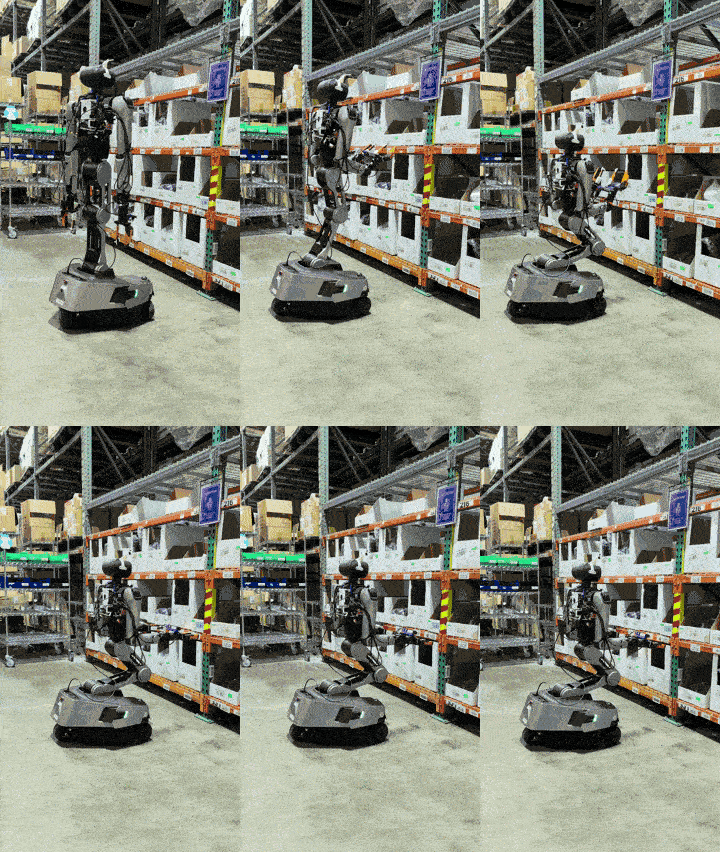
The reward for all that effort, the technical rigor and collaborative humility, is a well-balanced team and the immense pride I feel now. I am so proud of the team I work with every day. We all have sacrificed a great deal to build a system we believe in. We will never be "done" because we are always building a better system, improving our designs, and checking our hypotheses. With that in mind, it is crucial to know when to celebrate a win. To take stock of where you have been, what you have accomplished, and where you are planning to go. This past week was one of triumph and accomplishment and there is always a new performance on the horizon.